
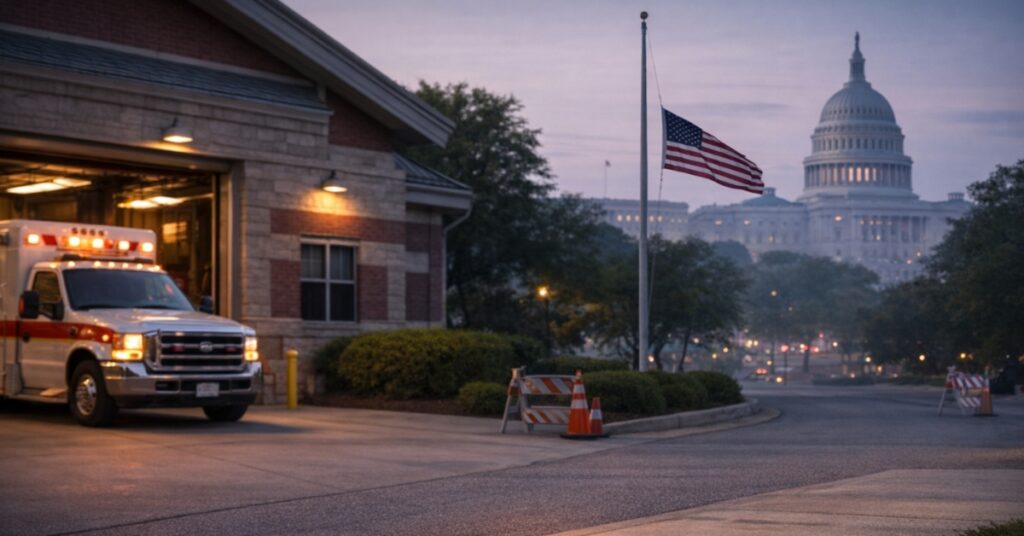
The Shutdown Is Ongoing — What It Means for Fire and EMS
In early February 2026, a partial federal government shutdown began dominating the headlines. As it continues, the disruption it is bringing to fire and emergency services across the country deserves close attention. Most Americans associate shutdowns with closed national parks or furloughed federal workers rather than local fire and EMS services.
However, those agencies depend on federal funding, making them vulnerable to these kinds of interruptions. How is this partial shutdown affecting the fire service, and how should departments prepare if it continues?
What Actually Shuts Down – and What Doesn’t
Not everything stops during a shutdown. Essential emergency response functions, including FEMA and core DHS operations, generally continue. Fire trucks keep rolling, but the administrative systems behind them slow considerably. Grant reviews pause, contract payments may be delayed, and processing timelines stretch in ways that affect long-term readiness.
Federal Grants: The Biggest Area of Concern
Two programs are especially significant: the Assistance to Firefighters Grant (AFG) and the Staffing for Adequate Fire and Emergency Response (SAFER) grant, both administered through FEMA. During a shutdown:
- AFG application reviews may be paused, and award announcements may be delayed
- Already-awarded grants may face delays in reimbursement
- SAFER reimbursement delays can lead to hiring freezes
- Equipment purchases may be postponed
In 2025, Virginia expanded presumptive cancer coverage for firefighters, reinforcing how policy stability matters alongside funding stability.
EMS Funding and Federal Reimbursement
EMS agencies have a degree of protection because Medicare and Medicaid are mandatory spending programs, so they continue regardless of a funding lapse. However, other discretionary programs that support local public safety can be quickly interrupted as soon as appropriations stop.
Training and Federal Partnerships
Federal training programs, conferences, and advisory panels can be postponed during a shutdown. The National Fire Academy (NFA), which provides continuing education and leadership development for fire service professionals, may see reduced or paused operations. Interagency planning meetings that rely on federal participation may be delayed as well.
In this way, the effects of even short-lived shutdowns can create ripple effects that last for years. Without continuing education, the next generation of fire service leaders may not advance through training pipelines on schedule.
Disaster Response During a Shutdown
Active disaster response is generally classified as essential and remains operational during funding lapses. During the current shutdown, experts note that FEMA still has sufficient funds. But had the shutdown gone on for longer, it could have strained longer-term recovery and mitigation operations.
Beyond the immediate tragedy, the concern is more about what follows: long-term recovery funds can slow, and mitigation programs may pause. For example, during a previous shutdown, National Flood Insurance Program operations had to halt, delaying reconstruction efforts. The 2025 Los Angeles wildfires illustrated how long-term federal coordination remains critical well beyond initial response.
Budget Planning Uncertainty for Fire Chiefs
Fire departments that depend on federal funding or grants for specific programs or equipment face real challenges when those funds become temporarily unavailable. Local governments often need to develop contingency plans until federal funding is restored. This may mean reallocating local resources, pausing non-essential activities, or exploring alternative funding sources.
The specific impact depends on the duration of the shutdown and the extent to which a department relies on federal funds. Staffing decisions and apparatus purchases require months, sometimes years, of planning. Funding uncertainty introduces cash flow questions and procurement delays that can affect a department’s ability to plan and invest in its long-term readiness. In Sun Prairie, Wisconsin, officials turned to a 2026 levy referendum to stabilize fire and EMS funding amid rising demand.
What This Shutdown Is Showing So Far
Congress had already passed roughly half of the year’s funding bills. This allowed several important agencies and programs to keep operating without interruption, and core emergency response functions were maintained.
The primary concerns were administrative: grant processing bottlenecks, reimbursement delays, and paused training and planning activities. So far, this reflects patterns seen in previous shutdowns, where the effects were not immediately visible to the public but created real disruptions behind the scenes.
Even during an ongoing shutdown, emergency response continues. What it does disrupt are the funding timelines and long-term preparedness infrastructure that fire and EMS agencies depend on to stay ready. As departments move through 2026, funding reliability and staffing sustainability remain central concerns nationwide.
Final Thoughts: Predictable Funding Is a Public Safety Issue
Fire departments and EMS agencies are built for resilience. They will answer every call, regardless of what is happening in Washington. But resilience on the fireground does not automatically translate to efficiency in the budget office. Ongoing funding delays, administrative slowdowns, and grant processing interruptions make it harder to pay and equip the people who make rescues possible.
Predictable, uninterrupted funding streams are not an administrative convenience. They are a foundational requirement for sustainable fire and EMS operations and a direct investment in community safety.