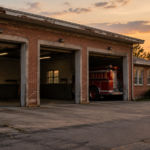
Across the nation, local communities face a silent crisis of decaying stations and outdated response trucks, prompting urgent capital measures to secure the future of first response.
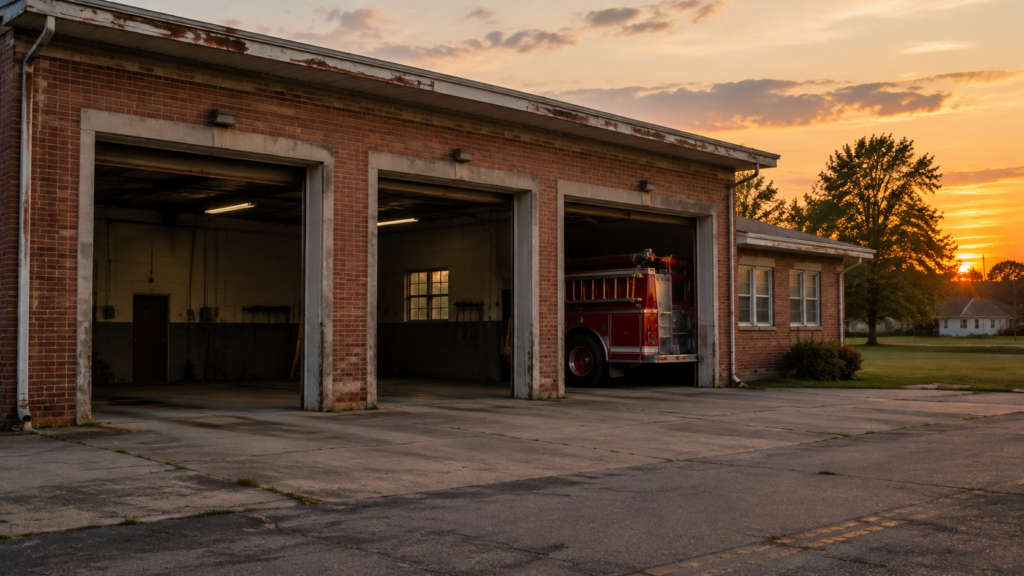
Imagine a modern firefighter. You probably envision high-tech gear, swift firetrucks, and clean, sterile living quarters. The reality in many municipal firehouses is shockingly different: crumbling brick, toxic exhaust, and ancient fire engines that break down on the way to emergencies. Many of our local stations were built in an era before advanced breathing systems and heavy modern apparatus existed.
Across the nation, fire districts are quietly struggling to maintain their critical infrastructure. Old buildings lack proper ventilation, leaving firefighters exposed to hazardous carcinogens even while they sleep in their quarters. When emergency vehicles are too large to fit through historical station bay doors, response times inevitably suffer. To solve these physical constraints, departments must rely on capital bond measures and operating levies to keep pace with growth.
Voters hold the power to directly repair this broken safety net. However, because local funding measures sit at the bottom of the ballot, they are easily overshadowed by high-profile national campaigns. Understanding how these measures work is the first step toward securing our communities’ safety.
Understanding the Ballot: Translating Municipal Finance
Before looking at real-world examples, let’s simplify the technical terms on your ballot. The easiest way to think about municipal finance is that levies are for daily operations and staffing, while bonds are for major capital buildings. A capital bond acts like a long-term mortgage, allowing a district to borrow money for major construction projects and pay it back over several decades.
In contrast, a tax levy is a property tax collected annually to pay for daily operating costs like personnel salaries, medical supplies, and fuel. Finally, a levy lid lift is a voter-approved measure that restores a tax rate to its previous level after it has been lowered by state limits or rising property values.
Case Study 1: Rebuilding Tri-State Fire Protection District
A prime example of a community tackling its infrastructure crisis occurred in the Tri-State Fire Protection District in Illinois. Serving Burr Ridge, Darien, Willowbrook, and Willow Springs, the district found itself operating out of facilities past their useful life. In March 2026, the district placed a $38.1 million bond referendum on the ballot to modernize all four of its active fire stations. This was the first tax-increase referendum the district had sought since its founding in 1946.
The planned upgrades go far beyond cosmetic fixes. At the Darien station, firefighters are completely rebuilding a facility that had outdated, inefficient layouts. In Burr Ridge, expanding the existing station will allow for modern, heavy apparatus to be housed safely. Crucially, these renovations will install state-of-the-art ventilation systems that dramatically reduce firefighters’ exposure to diesel exhaust and carcinogens inside the stations.
Voters recognized the urgent need to protect those who protect them. The $38.1 million bond was approved by a decisive 64% majority. This investment means the owner of a $400,000 home will pay about $140 annually for the next 20 years. It is a small price to pay to ensure that emergency response times do not suffer and that our local heroes have a safe workplace.
Case Study 2: Reversing Levy Erosion in Benton County, Washington
While Tri-State used bonds for buildings, Benton County Fire District 4 (BCFD4) in Washington State recently had to address operational funding through a levy lid lift. Based in West Richland, the district serves 25,000 residents across a geographically challenging 52-square-mile territory. Over the last decade, rapid suburban growth and an aging population have caused call volumes to surge by 78.3 percent. BCFD4 firefighters and paramedics now respond to over 2,350 calls annually, with nearly 70% of those being medical emergencies.
Despite the skyrocketing demand for service, the district’s funding was severely restricted by Washington’s strict property tax laws. State law limits annual property tax revenue growth to just 1% per year. As local property values rose, the district’s tax rate was artificially dragged down from $1.50 per $1,000 of assessed value to $1.31. This process, known as levy erosion, left the district with less real purchasing power than it had six years prior.
To reverse this decline, the fire district asked voters to approve a levy lid lift to restore the rate to the previously approved $1.50. The restored funding will allow the district to hire six new full-time firefighters, purchase a modern fire engine, and expand water rescue programs. For the owner of a $350,000 home, the restoration costs just $5.54 per month. Voters overwhelmingly approved the measure, demonstrating their commitment to maintaining high-quality emergency services.
Why Capital Measures Are Not Just “Another Tax”
Opponents of municipal bonds and levies often label them as unnecessary tax increases. However, delaying these investments is a costly mistake. Operating outdated stations with inefficient energy systems drains valuable taxpayer dollars that could be spent on life-saving operations. Postponing necessary facility repairs only guarantees that the ultimate reconstruction bill will be far more expensive due to inflation.
Furthermore, modernizing facilities is essential for recruiting and retaining top-tier paramedic and firefighter talent. Professional first responders are in high demand across the country, and they will naturally choose to work in departments that prioritize their physical safety and health. Investing in your local department is not just about buildings; it is a direct investment in the survival and prosperity of your neighborhood.
A Simple Action Plan for Supporting First Responders
As voter turnout drops during midterms and local elections, every single vote carries massive weight. Here are three simple steps you can take to support your local emergency services:
- Look Beyond the Ballot Title: Read the full explanation of local bond and levy measures on your county’s voter guide, as ballot text can sometimes mask the real, low-cost impact on your wallet.
- Advocate for First Responder Wellness: Support measures that fund station renovations, especially those focused on upgrading ventilation systems to reduce firefighter cancer risks.
- Tour Your Local Firehouse: Reach out to your local department to learn about their equipment needs and response challenges firsthand.