From the industrial heartland of Ohio to the fast-growing cities of Texas, the 2026 election results deliver a clear message: local communities are ready to fund public safety when the case is made clear.
Now that the dust has settled on the 2026 midterm elections, municipal finance experts and public safety advocates are digging through the data. The story told by the local returns is both encouraging and deeply instructional. While national races dominated airtime, local ballot boxes proved that everyday voters are committed to protecting their first responders when they understand what is at stake.
Across the United States, municipal levies, equipment bonds, and emergency service district proposals faced critical tests. The outcomes of these down-ballot measures provide a valuable roadmap for public safety advocacy in the years to come. By looking closely at community wins and lessons learned, we can establish clear oversight goals to ensure our newly approved taxpayer dollars are spent responsibly.
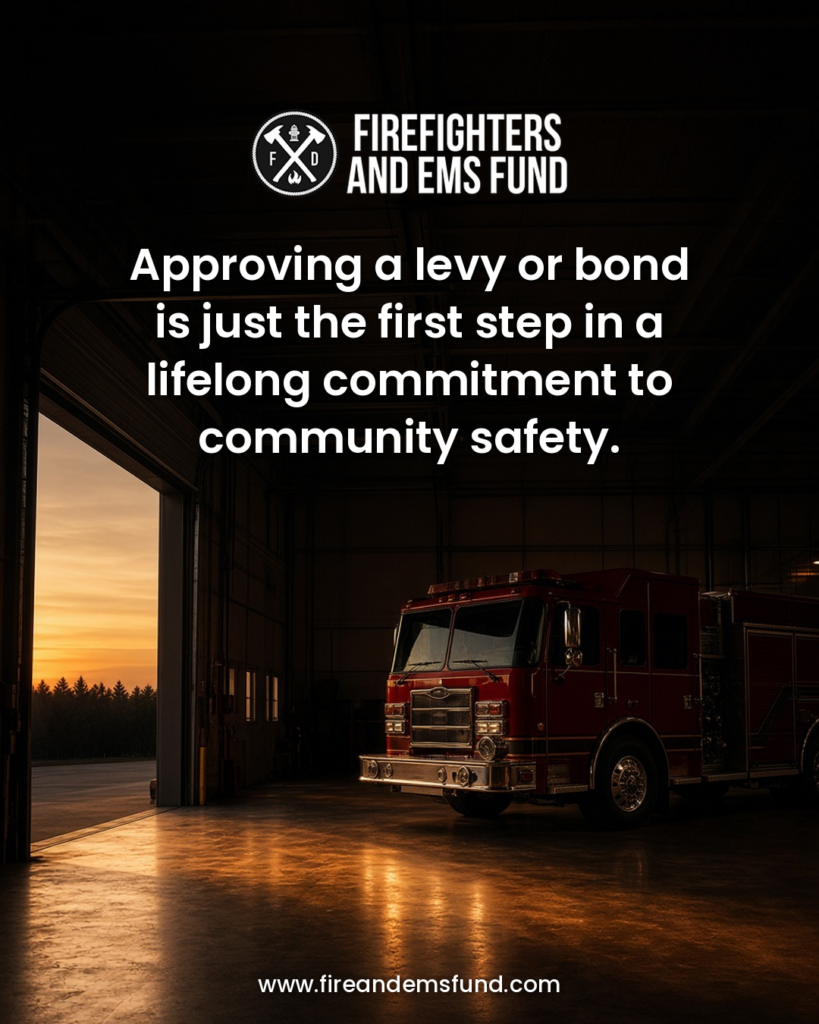
Approving a levy or bond is just the first step in a lifelong commitment to community safety. To honor that commitment, citizens must actively transition from voters to advocates, monitoring how these public funds are utilized.
Decisive Victories in the Industrial Heartland: Trumbull County, Ohio
One of the most encouraging success stories of the 2026 election cycle comes from Trumbull County, Ohio. In Champion Township, voters faced a critical decision regarding a five-year, 2.65-mill additional fire and EMS levy. Local leaders warned that without the additional funding, severe staffing shortages would continue to leave vital emergency shifts completely uncovered.
Voters responded with a resounding mandate, passing the Champion Township levy with a decisive 63% majority. The measure will generate an estimated $692,145 annually, costing the owner of a $100,000 home approximately $93 per year. This funding will allow the department to stabilize its workforce and ensure that enough professional firefighters are on duty to handle overlapping emergency calls.
Meanwhile, in neighboring Farmington Township, voters approved a 2.9-mill continuing fire and EMS levy by a margin of 57% to 43%. This victory was especially sweet because the exact same measure had failed in the previous election due to a heartbreaking 152-152 tie vote. The successful levy will generate $206,669 annually, replacing three outdated levies from the early 1980s and providing stable funding for personnel wages, medical supplies, and ambulance operations.
Additionally, the township of McDonald, Ohio placed a 4.5-mill safety services levy on the ballot to generate $310,000 annually. This voter-approved measure will benefit both the police and fire departments, directly addressing the skyrocketing cost of safety gear and emergency vehicles. These Midwest victories demonstrate that taxpayers are highly supportive of their first responders when local officials conduct transparent informational campaigns.
Modernizing Facilities in Rapidly Growing Texas: Tarrant County
Moving from the Midwest to the Southwest, the fast-growing communities of Tarrant County, Texas faced their own critical infrastructure challenges. In Fort Worth, the third-largest city in the region, rapid population growth has placed an immense strain on existing public safety systems. To keep pace with demand, the city council placed Proposition E, a massive $63,919,300 Police, Fire, and Emergency Communications Facilities Bond Measure, on the ballot.
Voters delivered a clear victory for public safety, overwhelmingly approving the multi-million dollar bond program. The authorized funds will be used to construct, expand, and equip state-of-the-art police and fire facilities throughout the city. A substantial portion of the proceeds will also go toward modernizing the city’s emergency communications center, ensuring that 911 dispatchers can coordinate rapid response times.
Because Tarrant County operates under strict debt-management guidelines, municipal leaders were able to secure these vital capital investments without increasing local property tax rates. The success of Proposition E shows that even in large, diverse metropolitan areas, public safety remains a unifying issue. Voters are highly willing to approve large-scale bonds when they trust that the funds will be used to modernize outdated, life-saving infrastructure.
Critical Lessons Learned from the 2026 Election Cycle
The results of the 2026 election cycle offer several vital takeaways for first responder advocacy groups. First, staffing remains the primary hurdle for fire and EMS departments across the country. Whether in rural Ohio or urban Texas, departments cannot maintain safe response times without enough funding to pay competitive wages and retain professional paramedics.
Second, the power of a single vote cannot be overstated. The dramatic turnaround in Farmington Township—moving from a tie vote to a comfortable victory—proves that every single ballot cast in local elections carries massive mathematical weight. We must continue to educate communities that down-ballot measures are just as important as high-profile national races.
Finally, proactive, transparent communication is the key to passing any local levy. In both Champion and Farmington townships, fiscal officers and trustees held multiple public town halls to explain exactly how the levy would impact property taxes and what would happen if the measures failed. This direct engagement built the community trust needed to win at the ballot box.
Looking Ahead: 2027 Local Budget Oversight Goals
While passing these measures is a cause for celebration, the work is far from over. As we look ahead to 2027, the focus of public safety advocacy must shift from election campaigns to active budget oversight. Taxpayers have a responsibility to monitor how these newly approved funds are allocated and ensure they are spent exactly as promised.
In Fort Worth, citizens must hold local leaders accountable for the rollout of the $63.9 million public safety bond, tracking the progress of new station constructions and communications upgrades. In Trumbull County, residents should attend township meetings to verify that levy funds are being used to hire field personnel and raise wages for underpaid staff. By establishing citizen oversight, we can maintain the vital trust established between first responders, local governments, and the communities they serve.
A Simple Action Plan for Post-Election Advocacy
You can help maintain municipal accountability and support your local first responders throughout the coming year by taking these three steps:
- Attend Local Township or City Council Meetings: Regularly attend or watch municipal meetings to stay informed about how local fire and EMS budgets are being managed.
- Request Public Expenditure Reports: Utilize your local government’s public records portal to review annual fire department spending, ensuring levy funds are used for operations and personnel as promised.
- Join or Support Citizen Advisory Boards: Volunteer for local public safety or finance advisory committees to provide direct community input on municipal budget priorities.