When voters skip the local issues at the bottom of the ticket, they hand decision-making power to a tiny minority, putting crucial fire and EMS operations at risk.
Imagine an election where only one out of every seven neighbors in your community shows up to vote. That isn’t a hypothetical scenario; it’s the standard reality for municipal and primary elections across America. While major national offices grab headlines and fill television screens, the local safety levies that determine whether an ambulance arrives at your door are decided by paper-thin vote margins.
When voters skip local ballot measures, the consequences are immediate and dangerous. Fire and EMS departments are forced to operate with outdated equipment, slower response times, and severe staffing shortages. By understanding the math of ballot drop-off, we can see how low turnout threatens the very safety of our neighborhoods.
Skipping the local questions at the bottom of your ballot is a silent vote against public safety. To protect our families, we must recognize how voter fatigue and low turnout work against our first responders.
The Mechanics of Ballot Drop-Off and Voter Fatigue
To understand how critical fire levies fail, we must first look at how voters behave in the voting booth. Two major psychological factors influence the outcome of down-ballot measures: voter drop-off and ballot fatigue. Let’s break these down into simple concepts.
- Voter Drop-Off: This is the statistical difference between the high number of people who vote for a major office (like President or Governor) and the much lower number who vote on municipal measures at the bottom.
- Ballot Fatigue: This occurs when a voter gets tired, overwhelmed, or confused by a long list of candidates and complex questions as they scroll down their ballot.
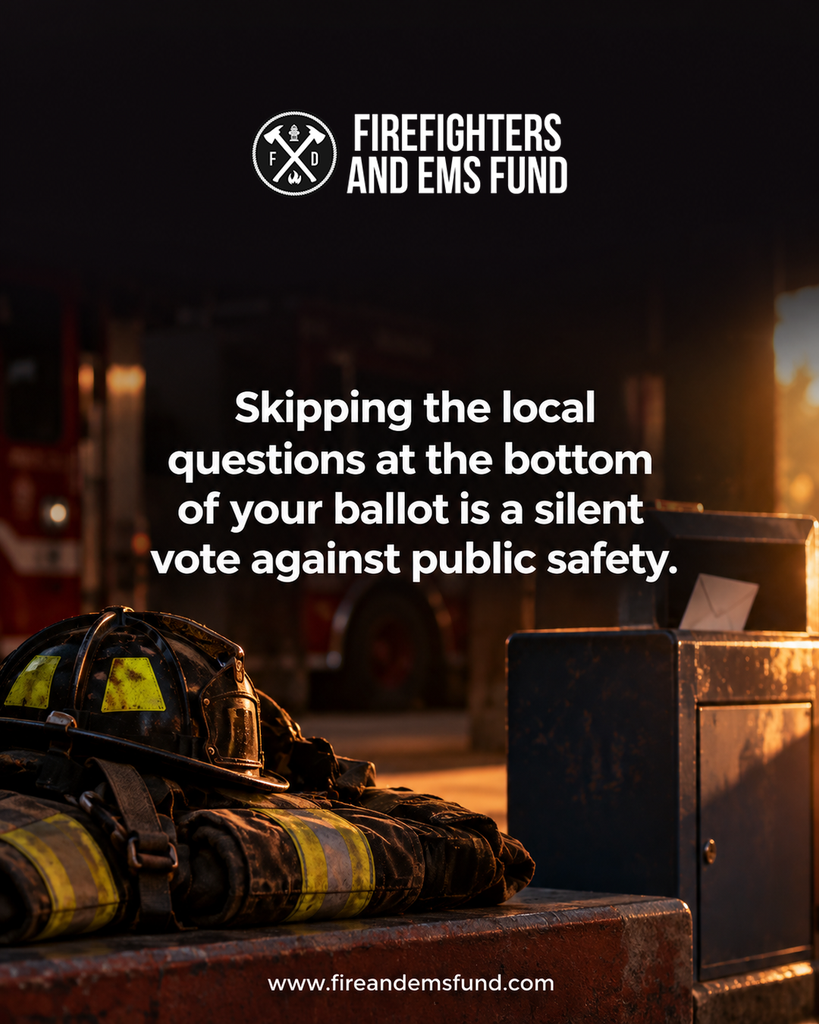
Because of ballot fatigue, thousands of voters simply leave the local levy questions blank. This means that local safety measures often fail not because the majority of the community opposes them, but because their supporters simply did not finish their ballots.
Real-World Proof: The 13.8% Turnout in Jefferson County, Missouri
A stark example of the power of low turnout occurred in Jefferson County, Missouri, during their April 7, 2026 municipal election. Across the county, local fire districts proposed an innovative funding shift to move a portion of their budgets from property taxes to a local sales tax. This proposal was designed to lower property tax burdens for homeowners while ensuring that out-of-town visitors and shoppers helped support local emergency services.
Despite the massive local impact of these funding shifts, official election records show that county-wide voter turnout was a dismal 13.8%. This means that over 86% of registered voters stayed home, leaving a tiny fraction of the population to decide the financial future of their local fire departments.
When turnout is this low, a very small, organized group of anti-tax voters can easily defeat public safety measures. First responders are left with crumbling budgets, and homeowners miss out on property tax relief, simply because the vast majority of the community failed to participate.
Real-World Proof: Deschutes County, Oregon’s Primary Struggle
A similar struggle played out in Deschutes County, Oregon, during their May 19, 2026 primary election. Three distinct local fire districts—Sisters-Camp Sherman, Cloverdale, and Alfalfa—placed five-year local option levies on the ballot. These districts were desperately seeking funds to add firefighter-EMTs, combat rising call volumes, and reduce emergency response times.
The need was undeniable; Sisters-Camp Sherman reported a 65% increase in emergency calls over the last decade, with medical calls accounting for 70% of responses. Yet, early statewide ballot return reports just a week before the election showed a turnout rate of only 11.5%. By the time all ballots were counted, final statewide turnout rested at just 37.97%.
In Oregon’s vote-by-mail system, returning a ballot is incredibly simple, requiring no postage. Yet, because of low turnout, these crucial safety levies—which cost average homeowners only a few dollars a month—are decided by razor-thin margins. A difference of just fifty or one hundred votes can determine whether a district can hire the paramedics needed to respond to overlapping emergencies.
The High Stakes of Low Turnout
In low-turnout spring elections, your single vote carries up to ten times more mathematical power than it does in a high-turnout November election. When you choose not to vote, you are not remaining neutral. Instead, you are actively handing over your decision-making power to a very small, vocal minority.
National politics will not dispatch a crew to put out a fire in your kitchen. State legislators cannot buy the medical equipment needed to treat a heart attack. These life-saving operations are funded and approved directly at the local level by voters who take the time to complete their ballots.
How to Defeat Ballot Drop-Off: A 3-Step Plan
You can play a direct role in turning the tide for local fire and EMS funding. Here is a simple, three-step action plan to fight voter drop-off:
- Vote Your Ballot from the Bottom Up: When you receive your ballot, start at the very bottom with the local initiatives and levies first, ensuring your local first responders get your full attention before ballot fatigue sets in.
- Set Calendar Alerts for Local Elections: Local municipal and primary elections occur in the spring and summer when turnout is lowest. Set reminders on your phone so you never miss a local voting deadline.
- Mobilize Your Neighborhood: Share information about local fire levies on social media and talk to your neighbors. Remind them that local safety measures have a far more immediate impact on their daily lives than national political races.