This November, voters in Mesa, Arizona will decide on Question 1, a crucial referendum to fund future fire stations, construct a modern training academy, and overhaul emergency dispatch networks.
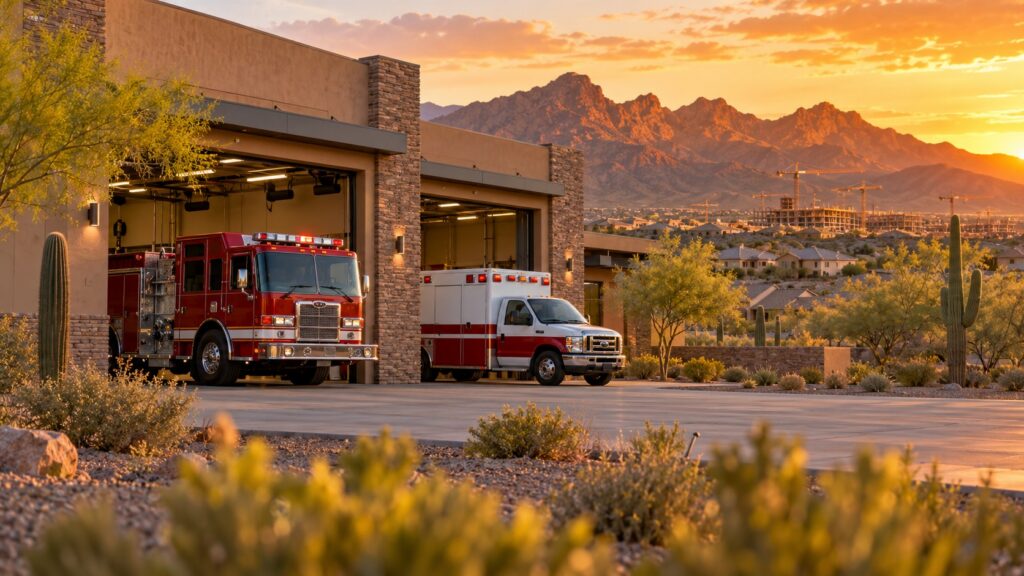
Mesa is currently experiencing one of the fastest population surges in the American Southwest, transforming quiet desert spaces into bustling industrial and residential hubs. As the city marches toward an estimated population of over 600,000 residents by 2035, the physical boundaries of its public safety systems are being stretched to their absolute limits. To keep pace with this rapid growth, local emergency crews must have the physical infrastructure to respond in those critical first minutes.
Our local emergency medical and fire services are the lifeblood of community safety, but they cannot operate effectively without modern tools.
Rapid suburban expansion means that paramedics are traveling longer distances to reach developing neighborhoods, which naturally delays emergency care. This November, Mesa voters will decide on Question 1, a major $150 million public safety general obligation bond to secure the city’s rescue infrastructure.
The Regional Strain of Rapid Growth
The pressure of rapid growth is most visible in southeast Mesa, where manufacturing centers and master-planned residential developments are rising side-by-side. While the city recently broke ground on Fire Station 224 to serve this booming area, the district’s long-term capital budget has struggled to keep pace with inflation. Without dedicated funding to buy land for future fire stations, response times in expanding outer neighborhoods will inevitably slow.
Furthermore, Mesa’s first responders have outgrown their existing training facilities, which are essential for practicing complex, modern rescue maneuvers. Recruits and active-duty personnel must regularly train for high-risk scenarios, including active shooter response, high-rise fires, and hazardous chemical spills. To address these critical space and technology deficits, the Mesa City Council voted unanimously to place the $150 million Question 1 bond on the upcoming ballot.
Before reviewing the planned projects, let’s simplify the technical terms on your ballot. A general obligation bond is a form of public borrowing repaid through local property taxes, legally restricting all proceeds to the construction and equipment projects approved by voters. These bonds are repaid using a secondary property tax, which is a dedicated tax rate used exclusively to pay off municipal debt and is separate from the primary tax that funds daily city operations.
Inside the $150 Million Question 1 Plan
If authorized by a simple majority of voters tomorrow, Question 1 will fund five major municipal safety projects to modernize Mesa’s emergency network:
- A Brand New Joint Public Safety Training Facility ($61.5 Million): A substantial portion of the bond will fund a modern, 69,600-square-foot training academy for both police recruits and fire-rescue personnel.
- Acquiring Land for Future Fire Stations ($5.0 Million): The fire department will secure property for two future firehouses in rapidly expanding high-growth sectors.
- Upgraded Public Safety Communications ($10.1 Million): The bond will fund critical technology overhauls for the city’s 911 dispatch networks, vehicle radios, and emergency communication gear.
- Central Police Station Expansion ($28.7 Million): Funding will enable a major vertical expansion and tenant improvements to modernize the city’s central law enforcement headquarters.
- West Mesa Fleet and Warehouse Center ($40.9 Million): The city will demolish and rebuild its outdated fleet service center and public safety warehouse to keep response vehicles operational.
These physical investments directly impact the health and safety of every Mesa resident. For example, during a cardiac event or major structure fire, a delay of even sixty seconds can lead to catastrophic consequences. Upgrading communication systems and securing land for future fire stations ensures that paramedics are positioned closer to developing neighborhoods.
The Financial Math of Question 1
If voters approve the $150 million bond program, the city will repay the debt over a 26-year period using secondary property tax revenues.
The estimated average tax rate for the proposed bond is $0.2226 per $100 of assessed property valuation, which translates to $22.26 per $100,000 of assessed value. For a homeowner with an assessed home value of $250,000, this bond will cost an average of $36 annually—or just $3.00 a month.
Opponents of municipal bond programs point out that adding to the city’s debt portfolio increases the overall tax burden on families and businesses. They argue that with rising cost-of-living pressures, the city should postpone major capital construction projects and fund basic maintenance through its general fund. Conversely, public safety advocates emphasize that delaying these projects is a costly mistake, as rising material and labor costs will only drive up the ultimate construction bill.
A Simple Action Plan for Mesa Voters
You can play a direct role in shaping your city’s emergency response network by taking these three simple steps:
- Verify Your Voter Registration: Double-check your active voter status through the Maricopa County Recorder’s portal to ensure you are eligible to cast your ballot.
- Locate Your Voting Center: Find your closest early voting location or election day voting center using the Maricopa County voter dashboard.
- Spread the Word to Neighbors: Talk to your friends and family about the low monthly cost of Question 1, helping them understand that this local safety measure directly protects their households.
Sources and References
- City of Mesa Official 2026 General Election and Ballot Measure Guide
- YourValley.net Report on Mesa City Council Approving Public Safety Bond
- PlayPOTUS Voter Guide and Key Dates for Mesa, Arizona 2026 Elections
- Ballotpedia Mesa, Arizona Question 1 Public Safety Bond Measure Information
- City of Mesa 2026 General Obligation Bond Program Project Portal